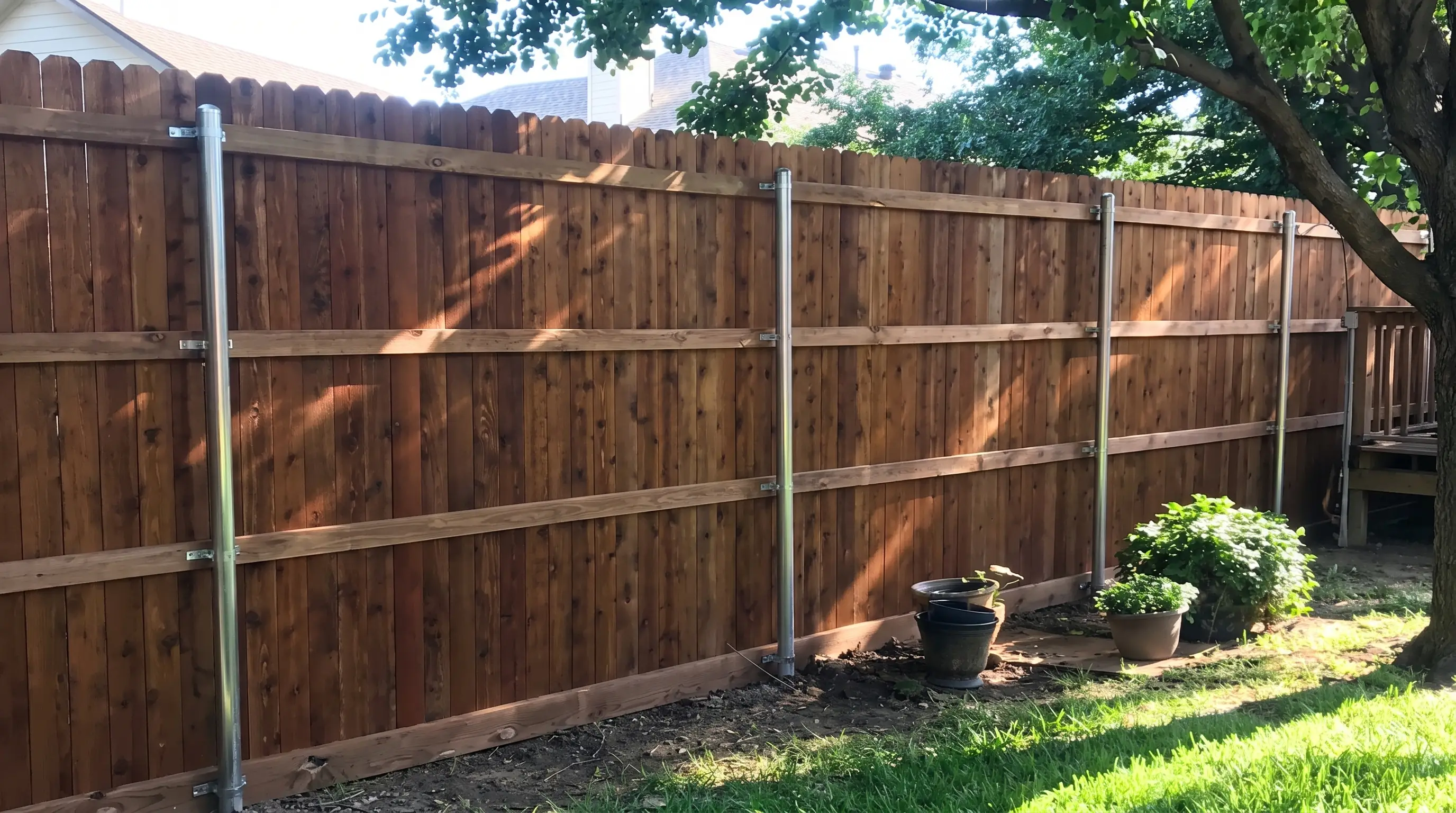
A fence is priced by the linear foot, not by a sticker. A few things move the number more than anything else, and knowing them helps you compare quotes fairly.
Why fences are priced by the linear foot
The question people ask most is how much fence installation costs, and the honest answer starts with a unit: fences are priced by the linear foot, not as a single sticker price. A short, plain fence on level ground and a long, tall fence with gates on a slope can be very different jobs, even on the same street. That is why a reliable number only comes after someone has walked your property.
We give you a free on-site estimate after a site visit. Fencing is priced per linear foot. Here are the factors that move the number most, roughly in order of impact.
Length and height
Total length is the biggest driver. Every additional foot of fence needs posts, rails, boards and labor. Height is next: a taller fence uses more material per foot, and it needs stronger posts to stand up to wind. If you are moving from a standard height to something taller, expect the number to move, and expect HOA or city rules to come into play.
Material and style
Material matters as much as length. Wood fence installation is the core of what we do, and within wood the choices are wood type, style and finish. Cedar costs more than pine but resists rot and insects better. Board on board uses more boards than side by side, so it costs more and gives the most privacy. Pre-stained wood costs more up front but saves a separate staining step.
Other materials price differently. Chain link fence installation is usually the most economical way to enclose a space, and wrought iron fences generally cost more than wood or chain link because of the material and fabrication. Tell us what you want the fence to do, and we can quote more than one option.
Gates and hardware
The same fence line can cost very different amounts depending on the gates. A walk gate is a small add. A wide drive gate needs heavier posts and hardware, and an automatic gate adds an operator, power and access equipment. See driveway gate installation for how those choices work.
Site conditions
What is in and under the ground affects labor. Slopes need stepped or raked panels. Trees and roots can block post holes. Hard or rocky ground is slower to dig, and many North Texas yards sit on clay soil that expands and contracts with moisture, which is one reason post depth and spacing matter. If there is an old fence to remove, that is added labor too.
Permits, HOA rules and property lines
Some cities require a permit for certain fences, HOAs may limit height and style, and property lines should be confirmed before a single post is set. These items rarely add much material cost, but they can affect timing, which is why we walk through them at the start. See our guide to fence installation time.
Upkeep and long-term value
The cheapest fence to build is not always the cheapest fence to own. A wood fence that is stained or sealed on a schedule lasts longer than one left bare in the sun and sprinklers. Cedar and pre-stained boards can cost more at the start, but they reduce the work you do later. Iron and vinyl-coated chain link ask for less upkeep but cost more or less at the start depending on the job. Think about how many years you plan to stay in the house, and spend accordingly.
How to compare fence quotes
Two quotes for the same fence can be far apart. Ask each company to spell out the details so you compare like with like.
- Total linear footage and fence height
- Wood type, board thickness and style
- How posts are set and how far apart they are
- Number and type of gates, and the hardware
- Old fence removal and haul-away
- Stain or seal, and who applies it
- Who is doing the work: the company crew or subcontractors
A quote that is much lower than the others often leaves something out.
Where the money goes on each type of fence
On a wood fence, most of the cost is lumber and labor for posts and boards. On wrought iron, it is fabrication and finish. On chain link, it is posts, fabric and gates. On a driveway gate, it is the hardware and any automation. On agricultural fencing, it is length and braced corners. Knowing where the money goes makes it easier to decide where to spend more and where to save.
What to do next
If you want a number for your property, contact us or call (817) 308-8648. We serve homes and businesses in Keller, Southlake, Watauga and nearby towns, and you can see how we handle quotes on our pricing page. If your current fence is failing, our guide to fence replacement can help you decide between repair and a new build.
Ready for a real fence installation number?
Describe your project and we will set up a free on-site estimate, specific to your scope.